
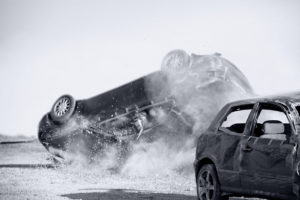
Here’s a scary statistic for you: One out of every 10 fatal auto accidents that had occurred between 2010 and 2013 in New Jersey involved an unlicensed driver. Frightening thought, huh? According to recent data, there were 2,177 fatal accidents within a four-year span and of those accidents, 231 of the drivers involved were driving without a license.
The numbers reflect a population of drivers operating without legal authority for many different reasons. Some never had a license at all. Others have a license that was suspended for unpaid surcharges, prior DWI convictions, accumulated points, child support arrears, or insurance lapses. Some have a license from another country that is not recognized in New Jersey. Some have a learner’s permit and are driving without the required supervising driver. The category includes people who have just lost their license that morning at a court hearing and people who have been driving on suspension for years.
The reason the unlicensed driver got behind the wheel matters for the criminal case, but it matters less for the civil case. Whether the driver never sat for a road test or had a license revoked the previous week, the legal duty owed to others on the road is the same. The civil case turns on what the driver did at the moment of the collision, not on the paperwork at the Motor Vehicle Commission.
These numbers are unfortunately not new. According to a 2008 report by the AAA Foundation for Traffic Safety, one if every five fatal car crashes in the United States each year involved a driver who either doesn’t have a valid driver’s license or doesn’t have a license at all. It’s statistics like this that make you almost want to stay off the road!
The pattern persists year after year because unlicensed drivers tend to share several risk factors. They are more likely to drive without insurance. They are more likely to leave the scene of the accident. They are more likely to have been drinking. They are more likely to be operating a vehicle they do not own. Each of those facts compounds the difficulty for the injured family in the days and weeks after the crash, because the at-fault driver becomes both physically and financially elusive.
So what happens if you get into a fatal auto accident with an unlicensed driver? For instance, you’re driving your sick mother to the doctor’s office when you get into a serious accident at an intersection. Your mother is instantly killed and you are seriously injured. You learn later that the other driver had a suspended license at the time of the accident and shouldn’t have been driving. What can you do?
Chances are, that unlicensed driver will have some criminal charges stacked against him/her. But not only can you sue the driver for personal injury, but you also have a wrongful death case on your hands. Under New Jersey’s wrongful death law, your family members have the right to financial compensation for:
- Loss of family income
- Funeral expenses
- Pain and suffering
- Any other damages caused by the accident
Why an Unlicensed Driver Case Is Harder Than It Looks
A driver without a license usually does not carry insurance. The vehicle may have no coverage at all, may have a policy that excludes the unlicensed driver from coverage, or may have only minimum limits that fall far short of what the family needs. The driver may have few personal assets to satisfy a judgment. A jury verdict against an unlicensed driver who has nothing is paper rather than payment. The family that wins on liability still has to figure out where the money comes from.
The answer in most cases is your own policy. New Jersey requires every auto insurance policy to include uninsured motorist coverage. UM coverage steps in when the at-fault driver has no insurance or cannot be identified, as in a hit-and-run case. Underinsured motorist coverage, or UIM, applies when the at-fault driver has insurance but not enough to cover the damages. The UM and UIM limits on your own policy become the primary source of compensation in most unlicensed driver cases. Most New Jersey drivers do not realize how much of their recovery in a serious case comes from their own carrier rather than from the at-fault driver’s.
The catch is that UM and UIM claims involve strict notice and procedural requirements. The carrier must be notified promptly. Settlements with the at-fault driver and his insurer require the UM carrier’s consent before they are finalized, or the UIM claim can be barred under what is known as the Longworth notice rule. A New Jersey Auto Accident Attorney handles these notices routinely and protects the claim against procedural defenses the UM carrier may raise later.
The Vehicle Owner May Also Be Responsible
When the unlicensed driver was operating a vehicle owned by someone else, the owner can be liable under a theory called negligent entrustment. The owner has a legal duty not to hand the keys to someone the owner knew or should have known was unfit to drive. Loaning a car to a person whose license has been suspended, to someone who has been drinking, or to someone whose history shows a pattern of reckless driving exposes the owner to civil liability for any harm caused.
Negligent entrustment claims are particularly valuable in unlicensed driver cases because the owner of the vehicle often has more insurance and more assets than the driver. The owner’s policy may cover the accident even if the driver was technically excluded, depending on the language of the policy and the circumstances. The discovery process in these cases looks at the owner’s knowledge of the driver’s status, prior conversations between them, and any pattern of allowing the unlicensed person to use the car.
Employers can also be liable when the unlicensed driver was working at the time of the crash. A trucking company, delivery service, or any other employer that allowed an unlicensed driver to operate a company vehicle is responsible under both respondeat superior and negligent hiring or negligent supervision theories. The corporate defendant brings deeper insurance coverage and assets into the case.
Understanding the New Jersey Wrongful Death and Survivor Actions
Two related but separate causes of action arise from a fatal accident in this state. The Wrongful Death Act, codified at N.J.S.A. 2A:31-1 and following, compensates the surviving family members for the economic loss they suffer from the decedent’s death. The Survivor Act, codified at N.J.S.A. 2A:15-3, allows the estate to recover damages the decedent could have recovered if she had lived, including pain and suffering between the moment of injury and the moment of death.
Wrongful death damages focus on what the family lost. Income the decedent would have earned and contributed to the household. Services the decedent provided, including childcare, household tasks, and care of elderly relatives. Loss of guidance, counsel, and companionship for surviving children, calculated as the financial value of those contributions rather than as emotional damages. The pain and suffering of the surviving family is generally not recoverable under the wrongful death portion of the case, which surprises many families.
Survival damages address what the decedent experienced. If there was a measurable period of conscious suffering between the impact and death, the estate can recover for that. Medical bills incurred between injury and death are recoverable. Funeral expenses are typically recovered under the wrongful death portion.
The two actions are usually filed together by the personal representative of the decedent’s estate. Designating a personal representative requires opening an estate in the Surrogate’s Court of the county where the decedent lived. The personal representative is the only person with legal authority to bring the suit. Family members who are not named representatives have no independent right to sue and must work through the representative.
The statute of limitations is two years from the date of death. Missing this deadline is fatal to the case. The deadline runs from the date of death rather than the date of the accident in cases where the decedent survived for some period after the crash.
Criminal Charges and the Civil Case
The criminal case against the unlicensed driver proceeds on its own track and serves a different purpose than the civil case. Charges may include vehicular homicide under N.J.S.A. 2C:11-5, assault by auto under N.J.S.A. 2C:12-1c, driving while suspended under N.J.S.A. 39:3-40, leaving the scene of an accident resulting in death under N.J.S.A. 2C:11-5.1, and various drug or alcohol related charges if those factors were present. Each charge carries its own sentencing range. Vehicular homicide is a second-degree crime that can produce a prison sentence of five to ten years, with enhanced penalties when alcohol or drugs are involved.
The criminal conviction can be useful evidence in the civil case under collateral estoppel principles, but the family does not need to wait for the criminal case to conclude before filing the wrongful death action. The two cases move on different schedules and can produce different outcomes. A criminal conviction proves civil liability beyond what the family would otherwise have to show, but a criminal acquittal does not bar the civil claim because the standards of proof are different.
Restitution may be ordered as part of the criminal sentence. Restitution amounts are usually modest and do not begin to cover the full economic loss in a fatal accident. The civil case is where actual recovery happens.
Steps to Take Immediately After the Crash
Get medical treatment for any injuries and follow up with all recommended care. Even if you feel relatively unhurt at the scene, the body absorbs the shock of a serious collision in ways that do not appear for hours or days. Document everything you can. If you have access to the vehicle, preserve it without repairing it so that an accident reconstruction expert can examine it later. Take photographs of the scene if you are able to return safely.
Request the police report and the responding officers’ contact information. Get the names of witnesses. Identify any nearby cameras at traffic intersections, businesses, or homes that may have captured the collision. Video evidence disappears quickly because most systems overwrite footage within thirty to sixty days. A subpoena or evidence preservation letter can hold the footage in place once a lawyer is involved.
Notify your own insurance carrier of the accident promptly. You have contractual obligations under the policy, and a failure to give timely notice can affect your UM and UIM coverage. Avoid giving a recorded statement to either your own carrier or the other side without speaking to a lawyer first. The statements taken in the first days after the accident are routinely used months later to challenge claims.
Avoid talking to anyone from the at-fault driver’s insurance company. Their job is to limit the carrier’s exposure, and any conversation you have with them will be aimed at that goal. Refer all calls to your attorney.
Common Mistakes Families Make
Settling the personal injury portion of the case before understanding the full extent of the harm is the most expensive mistake. Carriers often approach the surviving spouse or parents with a quick offer in the weeks after the accident. The offer rarely reflects the wrongful death damages, the survival damages, the UM or UIM claim, and any third-party claims that may exist. A release signed early in the process can eliminate all of those claims for a fraction of their value.
Assuming there is no money because the at-fault driver had no insurance is another. The investigation into other potentially responsible parties, the analysis of your own coverage, and the search for available assets can produce recovery in cases that seemed hopeless at the start.
Letting the personal representative role go to the wrong family member can create complications. The personal representative controls the case and any settlement. Family members who do not get along should think carefully about who is appointed and may need to discuss the role with an attorney before petitioning the Surrogate’s Court.
Missing the two-year deadline is irreversible. Grief and the demands of caring for surviving family members can crowd out the legal work. A lawyer involved early in the process tracks deadlines so the family does not have to.
Questions Families Ask
What if the unlicensed driver was a friend or family member?
The legal claim does not change. Insurance carriers do not care about personal relationships. The claim is made against the driver’s insurance and the owner’s insurance, and the personal relationship does not affect the legal merits. Many family members are uncomfortable with this reality. The discomfort is understandable, but the financial consequences of declining to pursue a claim can last for decades.
What if the driver fled the scene?
A hit-and-run becomes an uninsured motorist claim under your own policy because the at-fault driver cannot be identified. Police investigations sometimes identify the driver days or weeks later through surveillance footage, witness reports, or auto body shop reporting. If the driver is identified, the case can proceed against him and his insurance in addition to the UM claim.
What if the unlicensed driver was using a friend’s car without permission?
Insurance coverage depends on the language of the policy. Permissive use is a common feature of auto policies, but unauthorized use of a vehicle can void coverage in some circumstances. The investigation into how the driver came to be operating the vehicle is important to identifying which policies are in play.
What if my own insurance was inadequate?
UM and UIM limits in New Jersey vary widely. Some drivers carry the minimum, which can be far below the cost of a serious injury or death. Others have stacked or umbrella coverage that provides hundreds of thousands or millions in additional protection. An attorney can review every policy in the household, including auto, homeowner’s, and umbrella, to identify all available coverage.
If you were involved in a fatal auto accident with an unlicensed driver, you’re going to need legal help right away. Contact the Law Offices of Anthony Carbone now for a free consultation.