
Last week, a school bus had struck a tractor-trailer that had been parked on the shoulder of Route 35 in Middletown, New Jersey. Luckily, there were no children in the bus at the time of the accident and the bus driver’s injuries were not life-threatening. But the truck driver, who was not in his vehicle at the time of the crash, had fled the scene of the accident. This case brings up an interesting question: What will happen to the truck driver after he is found?
The instinct to leave the scene of a collision is more common than people realize. Drivers panic.
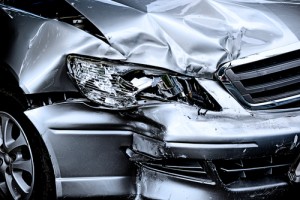
They worry about insurance rates. They are embarrassed by the dent they put in someone’s bumper. They have a suspended license they don’t want anyone checking. They have warrants. They have been drinking. They are running late and convince themselves the damage looks minor. None of these reasons hold up under the statute. The duty to stop is absolute. It does not depend on fault, on the visibility of damage, on the cooperation of the other driver, or on whether anyone was injured.
Although we don’t know the actual cause of the accident just yet, both parties probably had some responsibility in last Friday’s crash. Despite the fact that his truck was parked at the time of the accident, the driver still had a legal duty to stay with his vehicle until the authorities arrive. Even if he’s not found in fault of the accident, the fact that he left the scene is considered a felony in New Jersey. This means the tractor-trailer driver could face time in prison and a suspended license for his actions, which will threaten his job.
What New Jersey Law Requires After Any Crash
Two statutes set the rules. N.J.S.A. 39:4-129 governs leaving the scene of an accident. N.J.S.A. 39:4-130 governs the duty to report. Together they require any driver involved in a collision involving injury, death, or damage to attended or unattended property to do all of the following before leaving: stop at the scene or as close to the scene as possible without obstructing traffic, render reasonable assistance to anyone injured, exchange driver, vehicle, registration, and insurance information with the other driver, and notify the police if anyone is injured or if property damage exceeds five hundred dollars.
If the collision involves an unattended vehicle or unattended property, the duty does not disappear. The driver must make reasonable efforts to locate the owner. If the owner cannot be found, the driver must leave a note in a conspicuous place containing the driver’s name, address, registration, and a brief description of the accident, and then report the matter to the nearest police department or to a state trooper. Quietly leaving a parking lot after backing into a parked car is hit-and-run under this statute, even though the damage was modest and no one was hurt.
How the Penalties Scale With the Harm
The consequences depend on what happened in the collision. When the accident involves only property damage, leaving the scene is a motor vehicle offense rather than a criminal one. It carries fines, motor vehicle penalty points, license suspension typically of six months for a first offense, and potential jail time of up to thirty days. A second offense within five years brings increased penalties and a longer license suspension. Insurance surcharges follow the conviction independently.
When the accident involves bodily injury, the offense escalates significantly. Leaving the scene of an accident involving personal injury is graded as a fourth-degree crime, which can carry up to eighteen months in state prison and a fine up to ten thousand dollars. When the accident involves serious bodily injury, the offense becomes a third-degree crime under N.J.S.A. 2C:11-5.1 and carries three to five years in state prison along with a mandatory minimum period of parole ineligibility under certain circumstances. When the accident results in death, the consequences can include charges under both Title 39 and the criminal code, with prison exposure substantially higher and a presumption of incarceration that is difficult to overcome.
License loss can also be permanent. A conviction for leaving the scene of an accident resulting in death or serious injury can result in a forfeiture of driving privileges that may not be restorable for many years. For commercial drivers, the conviction can end a career.
Why Drivers Leave and Why It Backfires
The panic at the moment of impact is real. The decision to leave often is made in the first thirty seconds, before the driver has thought through what comes next. Modern technology has made the gamble nearly impossible to win. Almost every intersection in northern New Jersey has a traffic camera. Almost every shopping center, gas station, apartment building, and convenience store has cameras pointed at its parking lot. Witnesses with cell phones capture license plates within seconds. Cars have black boxes and event data recorders that show speed and braking before the impact. Insurance carriers exchange information about damaged vehicles, paint transfer, and tow records.
The result is that most hit-and-run cases get solved. A driver who stayed at the scene of a minor property damage incident might have walked away with an exchanged insurance card. The same driver who fled is now facing criminal charges, a license suspension, surcharges, the cost of defending the case, and the civil claim from the other driver who is now angry as well as injured.
What to Do at the Scene to Stay Compliant
The required steps are simple, but they are not optional. Stop your vehicle in a safe place as close to the collision as you can. Turn on your hazard lights. Check on anyone in the other vehicle and call 911 if anyone appears to be injured. Move your vehicle to the shoulder or a nearby parking area if it is drivable and the police instruct you to do so. Exchange driver’s license, vehicle registration, and insurance information with the other driver. Get the names and contact information of any witnesses. Take photographs of the position of the vehicles, the damage, and the surrounding area before anything is moved. Wait for the responding officer if you have called the police.
If the other driver is hostile or appears intoxicated, stay in your vehicle with the doors locked, call 911, and wait for police to arrive. If you cannot find the owner of an unattended vehicle you struck, write a complete note with your information and place it where it cannot blow away or be missed. Then call the police yourself before leaving the area. The note alone does not satisfy the statute. The report does.
What Happens After You Are Identified
Police investigations of hit-and-run accidents move quickly. Within hours of the call, officers typically have a partial license plate, a vehicle description, and witness statements. Auto body shops in this state are required to report repairs consistent with hit-and-run damage. Insurance carriers cooperate with police inquiries. By the time the driver gets the call asking him to come in for an interview, the investigators usually already know who he is.
The interview is not a friendly chat. Anything said becomes evidence. The driver has the right to remain silent and the right to have counsel present. Most drivers who agree to talk without an attorney say more than they should and provide the State with the very statements needed to prove the case. Speaking with a New Jersey Criminal Defense Attorney before any contact with investigators is the single most important step a person in this position can take.
After charges are filed, the matter proceeds through municipal court for property-damage cases and through Superior Court for cases involving injury or death. Bail conditions in the more serious cases can include restrictions on driving, surrender of the passport, and electronic monitoring. The prosecutor reviews the case for plea negotiation, but third-degree and fourth-degree charges carry mandatory periods of license loss that significantly limit what can be negotiated.
Defenses That Sometimes Apply
Not every hit-and-run case is open and shut. A defense lawyer reviews the evidence for several common weaknesses. Knowledge of the accident is an element of the offense. A driver who genuinely did not know that a collision occurred, such as in low-speed contact in a parking lot or contact with a small object that was confused for a pothole or debris, may have a viable defense. The State must prove the driver knew or should have known.
Identification is another common issue. A vehicle description without a clear license plate, witnesses who saw the car but not the driver, and partial video footage may not be enough to prove who was behind the wheel. The State must prove identity beyond a reasonable doubt in any criminal case.
Necessity and emergency are limited defenses, but they can apply. A driver who left the scene to take an injured passenger to the hospital may be able to invoke the statute’s own provisions that allow for departure when necessary to obtain medical assistance, provided the driver reports the incident as soon as practicable. The exception is narrow and requires careful documentation.
The Civil Side of a Hit-and-Run
Leaving the scene also affects any civil case that follows. A jury hearing the case learns that the defendant fled, and that fact almost always influences how the rest of the evidence is received. Insurance carriers handling property damage and bodily injury claims may also limit coverage when the insured violated the policy by leaving the scene without notifying the carrier. Uninsured motorist coverage for the victim becomes more important when the at-fault driver cannot be identified.
For the injured party, a hit-and-run is not the end of the road. New Jersey law provides remedies even when the responsible driver cannot be located. Notice requirements are short, however, and the steps necessary to preserve a UM claim should be addressed quickly with the help of counsel.
Questions Drivers Ask After an Accident
What if the damage looks minor and the other driver waves me off?
Stop anyway. Take photographs, exchange information, and consider calling the non-emergency police line so a report is created. The other driver’s verbal agreement at the scene means nothing the next day when the back pain starts and the insurance claim is filed. The exchange of information protects you.
What if I was the only one in the accident and I hit a guardrail or a fence?
Single-vehicle accidents that damage public or private property still trigger the duty to report. Striking a guardrail, a utility pole, a fence, a mailbox, or a parked vehicle and driving off is the same offense as fleeing a two-car collision. Report the incident to police as soon as possible.
What if I left because I was scared?
Fear is understandable, but it is not a legal defense. If you have already left the scene, the next best step is to call the police, identify yourself, and report the accident before they find you. Cooperation after the fact does not eliminate the charge, but it can influence how the case is resolved.
What if I had a suspended license?
Driving with a suspended license is its own offense, and leaving the scene does not make the suspension issue go away. The two charges proceed independently. An attorney can address them together, but you should not assume that fleeing protects you from the driving violation.
Remember, even if you’re not at fault or no one is injured in the accident, this doesn’t mean you can leave the scene of an accident. Even if the other driver says it’s ok to leave — don’t do it. By doing so, your simple car accident case will suddenly become a criminal matter.
If you were involved in an automobile accident and are in need of legal assistance, we can help. Contact the Law Offices of Anthony Carbone today for a free consultation.