
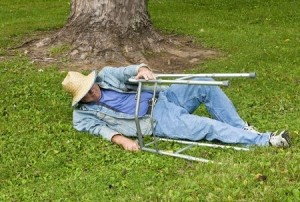
We all know what happens when we get older. Lack of energy, joints begin to ache, memory fades. What also happens is a lack of coordination. When day you’re walking down a flight of stairs without a problem and then next day you keep tripping on your own two feet.
What appears to be normal age-related decline is, in many cases, a medical condition with identifiable causes that a nursing home is supposed to evaluate and address. Inner ear disorders, medication side effects, neuropathy, low blood pressure, dehydration, urinary tract infections, and the early stages of dementia all increase fall risk and respond to treatment when identified. Trained nursing staff are expected to recognize these conditions, document them in the resident’s chart, and adjust the care plan accordingly. Treating a fall as the inevitable result of aging rather than a symptom of an unaddressed medical or environmental problem is itself a failure of care.
According to the Centers for Disease Control and Prevention, one out of three adults ages 65 and older suffer a slip and fall accident each year. It is the leading cause of both fatal and nonfatal injuries. It is the most common cause for brain injuries in older adults and most fractures are caused by falls. It’s a bigger problem than you think.
The numbers in long-term care facilities are even more alarming than in the general senior population. Nursing home residents fall at roughly twice the rate of seniors living independently. Many residents fall multiple times within a single year. The reason is not because nursing home residents are inherently more frail, although that contributes. It is because the facilities responsible for their care often fail to implement the prevention measures that medical evidence has shown to be effective. Properly staffed and managed facilities have far lower fall rates than facilities that cut corners.
So since it’s such a common problem in older adults, when a senior falls while living in a nursing home, the fault lies with him/her, right? Well, no, not really. Just like any other public facility, it is the duty of the nursing home to make sure the premises are safe for its residents. The nursing home should create care plan for each of its residents that will protect that resident. If the resident is known to have balance issues, then it is the responsibility of the nursing home to address the issue. Failure to do so is considered negligence on part of the facility and could result in a personal injury lawsuit.
What Federal and New Jersey Law Require of Nursing Homes
Nursing homes are not ordinary businesses. They are heavily regulated under the federal Nursing Home Reform Act, which is part of the Omnibus Budget Reconciliation Act of 1987, and under New Jersey statutes and regulations that govern long-term care. The federal regulations are administered by the Centers for Medicare and Medicaid Services and apply to any facility that accepts Medicare or Medicaid payments. Most facilities in this state do.
A nursing home is required to conduct a comprehensive assessment of every resident on admission and to update that assessment at regular intervals and whenever the resident’s condition changes. The assessment evaluates fall risk along with many other factors. Based on that assessment, the facility must develop a written care plan tailored to the resident. The plan identifies specific interventions the staff will take to address each risk. If a resident has been identified as a fall risk, the plan must describe how the facility will reduce that risk.
The New Jersey Nursing Home Responsibilities and Rights of Residents law, codified at N.J.S.A. 30:13-1 and following, gives residents specific rights that are enforceable in court. Among these is the right to receive adequate and appropriate medical and personal care. Violations of these rights can support not only a traditional negligence claim but also a statutory claim with its own remedies.
When a resident with a documented fall risk falls without an intervention being in place, the violation of the standard of care is often clear on the face of the records. The care plan said one thing. The actual care given did not match. That gap is where the case is made.
Common Patterns of Preventable Nursing Home Falls
The most common preventable falls share recurring patterns. A resident known to need assistance using the bathroom presses the call button. No one comes. The resident tries to walk to the bathroom alone and falls. A resident with a history of getting out of bed unattended has a bed alarm in the care plan, but the alarm was never installed, was unplugged, or was set to a delay that defeated its purpose. A resident known to require a walker is allowed to walk without it. A resident is left in a wheelchair without the brakes engaged. A resident is improperly transferred from bed to chair by a single aide when the care plan called for two.
Environmental hazards account for another category. Wet floors after mopping, clutter in walkways, poor lighting in hallways, beds set too high for the resident, side rails missing or improperly used, and broken equipment all contribute. Many of these conditions are documented in state inspection reports, which are public records and can be valuable evidence in litigation.
Understaffing is the root cause of many incidents. Facilities that operate with fewer aides than the resident population requires cannot provide the level of supervision their own care plans promise. Staffing records, time sheets, and the Payroll-Based Journal data that facilities are required to submit to the federal government all become evidence in the investigation.
Records That Matter in a Nursing Home Fall Case
A serious investigation of a nursing home fall starts with the resident’s chart. The admission assessment. The minimum data set assessments completed at intervals. The care plan and every revision. The medication administration record showing what the resident took and when. The nursing notes for the days leading up to the fall and the days afterward. The incident report. The post-fall assessment.
Facility-level records also matter. Staffing schedules and time records. Training records for the staff involved. Inspection reports from the state Department of Health. Citations and complaints filed against the facility. The facility’s own policies and procedures for fall prevention. Maintenance logs if equipment played a role.
Getting these records requires both formal requests under HIPAA authorizations signed by the resident or her authorized representative and, where the facility refuses to cooperate, subpoenas issued in litigation. Facilities sometimes destroy or alter records when they realize a claim is coming. A preservation letter sent early in the investigation, followed by litigation discovery, protects against that risk. A skilled New Jersey Personal Injury Attorney knows what records exist, where they live, and how to compel their production.
What the Family Should Do When a Fall Happens
Document everything from the moment you learn about the fall. Photograph any visible injuries. Note the date and time. Ask the staff what happened, what the resident was doing immediately before the fall, who responded, and what the resident said about it. Take notes during the conversation. Names of staff members on duty matter. If your loved one is conscious and able to speak, ask her about the fall and write down what she says.
Insist on a hospital evaluation. Nursing homes sometimes try to manage post-fall injuries internally to avoid drawing attention to the incident. Hip fractures, subdural hematomas, and other serious injuries can be missed without proper imaging. Many older adults take blood thinners for cardiac or stroke prevention, which makes head injuries from falls particularly dangerous. An external hospital exam creates an independent medical record and ensures that hidden injuries are caught.
Request a copy of the incident report. Federal regulations require facilities to investigate falls and to document them. The family is entitled to access the resident’s records. Some facilities resist providing incident reports and claim privilege. The legal availability of these documents in litigation is well established, and the early request is useful even when the facility delays.
Report the fall to the New Jersey Department of Health if you believe it reflects a pattern of inadequate care. The Department investigates complaints and can cite the facility. State investigations sometimes uncover evidence that supports a private civil claim.
Unfortunately, many seniors don’t seek medical attention after a fall. This can cause more damage and could lead to death. If you notice a loved one with a bruise or cuts, make sure you tell the nursing home staff. If the injuries were caused by a fall, check with the staff to see the incident was properly recorded and your loved one gets medical assistance.
Injuries and Damages in Nursing Home Fall Cases
Hip fractures are the most common serious injury from a fall in a nursing home. Surgical repair often is required, and the resident may never return to her prior level of function. Many residents who fracture a hip in a nursing home die within a year of complications related to immobility, including pneumonia and blood clots. Other common injuries include traumatic brain injury, vertebral compression fractures, wrist and shoulder fractures, lacerations requiring sutures, and skin tears that can become infected.
Damages in these cases reflect the full scope of what was lost. Past and future medical expenses for surgery, rehabilitation, and ongoing care. Pain and suffering from the injury and from any permanent loss of function. Loss of enjoyment of life, including the activities the resident can no longer engage in. In cases where the fall results in death, the family can bring a wrongful death claim under N.J.S.A. 2A:31-1 and a survival action under N.J.S.A. 2A:15-3.
Punitive damages may be available in cases of egregious facility conduct. A pattern of inadequate staffing, repeated failures to implement fall prevention measures, falsification of records, or other evidence of conscious disregard for resident safety can support an award beyond compensatory damages. New Jersey limits punitive damages to five times the compensatory award or $350,000, whichever is greater, but a strong punitive case sends a message that producers of harm should pay attention to.
How Long Families Have to Act
The statute of limitations for a personal injury claim in New Jersey is two years from the date of injury. For a wrongful death claim, the deadline is two years from the date of death. Cases involving older adults can be complicated by capacity issues, by the involvement of a guardian or power of attorney, and by the discovery rule, which can extend deadlines in some circumstances.
Despite the two-year window, families should not wait. Evidence in nursing home cases disappears quickly. Staff members leave. Memories fade. Documents are destroyed in the ordinary course of business unless preserved. The earlier the investigation starts, the stronger the case will be when it is presented.
Common Mistakes Families Make
Accepting the facility’s explanation at face value is the most frequent. The facility’s first account is rarely complete. Routine phrases like “unwitnessed fall” or “the resident is restless” may be hiding a story about understaffing, an unanswered call light, or a failure to implement the care plan.
Not retaining counsel because the resident already passed away is another. A wrongful death case rests on the conduct that contributed to the death, not on whether the resident is still living. Many of the most serious nursing home cases are brought after the resident has died of complications from a fall or other neglect.
Trusting that the facility will tell the family everything is a third mistake. Facilities have legal counsel of their own from the moment a serious injury occurs. The facility’s lawyer is not on the family’s side. The family needs its own representation to balance the equation.
Settling early without understanding the value of the case is the fourth. Insurance carriers for nursing homes know that families are often grieving and exhausted. Early offers reflect those vulnerabilities, not the value of the loss. Patience and a careful investigation almost always produce a better result.
Questions Families Ask
Can I bring a case if my loved one signed an arbitration agreement on admission?
Many facilities require new residents to sign arbitration agreements as part of the admission paperwork. These agreements try to force any future claim into private arbitration rather than court. Arbitration agreements can sometimes be challenged on the grounds of unconscionability, lack of capacity at signing, or violation of public policy. Even when enforceable, arbitration is not the end of the case. A successful claim in arbitration can produce a similar recovery to one in court.
What if my loved one had dementia and cannot describe what happened?
A resident’s inability to give a clear account does not bar the case. The investigation focuses on the records, the staff statements, the physical environment, and any witnesses. Expert witnesses can review the records and explain what should have happened and what went wrong.
Will the facility retaliate against my loved one if I file a claim?
Federal and state law prohibits retaliation against residents who, or whose families, file complaints or lawsuits. The protection is real, but families sometimes worry about subtle changes in care. An attorney can address concerns about retaliation directly with the facility and through the regulatory authorities if needed.
Is the case against the facility or against the corporate owner?
Both, in many cases. Nursing homes are often owned and managed by larger corporate entities that make staffing and budgeting decisions affecting day-to-day care. Holding the corporate parent accountable is sometimes necessary to address the root cause of the harm. Discovery into the corporate structure is a routine part of these cases.
Were you injured in a slip and fall accident? We are here to help you! Contact the Law Offices of Anthony Carbone, PC today for a free consultation. With more than 25 years of experience, we are prepared to get you what you deserve.